
Project History
When the Commonwealth of Massachusetts launched its Municipal Vulnerability Preparedness 2.0 pilot program in 2023, Cohasset was among the first communities selected to participate.
What emerged from this two-year collaborative process has fundamentally shifted how our town approaches climate resilience—with equity and community voices at the center.
Unlike traditional climate preparedness efforts that focus primarily on infrastructure, MVP 2.0 challenged Cohasset to dig deeper. The program asked not just "What climate risks do we face?" but "Who in our community is most vulnerable to these risks, and why?"
Working with Siler Climate Consulting, the town assembled a paid Core Team of 12 residents representing diverse organizations and perspectives throughout Cohasset. This group spent months identifying the factors that make some community members more resilient than others when climate-related disruptions arise.
While Cohasset is predominantly a high-income community, the MVP 2.0 team identified several groups facing particular climate risks:
Residents over 65 (with 7% below the poverty line) who may have limited mobility during evacuations and greater health risks during extreme temperatures
Children who depend on adults for safety decisions and may be more susceptible to heat and air quality impacts
People living with disabilities who may face barriers to accessing emergency services or evacuation routes
Renters who often have less control over their housing conditions and fewer resources for emergency preparedness
Energy burden households, approximately 38% of residents in Cohasset—meaning they spend a disproportionate amount of their income on utility costs, making them especially vulnerable when power outages require costly backup solutions or when extreme weather drives up heating and cooling needs
The community engagement process uncovered three critical vulnerability areas that intersect dramatically during climate events: transportation access, power outages, and food security.
1
2
3
Transportation emerged as a fundamental equity issue. With significant dependency on personal vehicles, limited public transportation, and no safe bicycle routes, residents without cars struggle to access essential services—particularly grocery stores located along Route 3A.
Power outages disproportionately impact vulnerable residents. Frequent outages, especially outside downtown, hit hardest those without generators: low-income residents who lose all their refrigerated food, and people relying on electric medical equipment. Currently, Cohasset has limited emergency shelter options, with Willcutt Commons operating only as a daytime warming station during winter disasters.
Food access challenges compound during emergencies. The combination of car-dependent grocery access and power outages creates a perfect storm, particularly for the 70 residents regularly served by the town's food pantry and those living in rental communities who must cross highways to reach food stores.
The Food Justice Seed Project
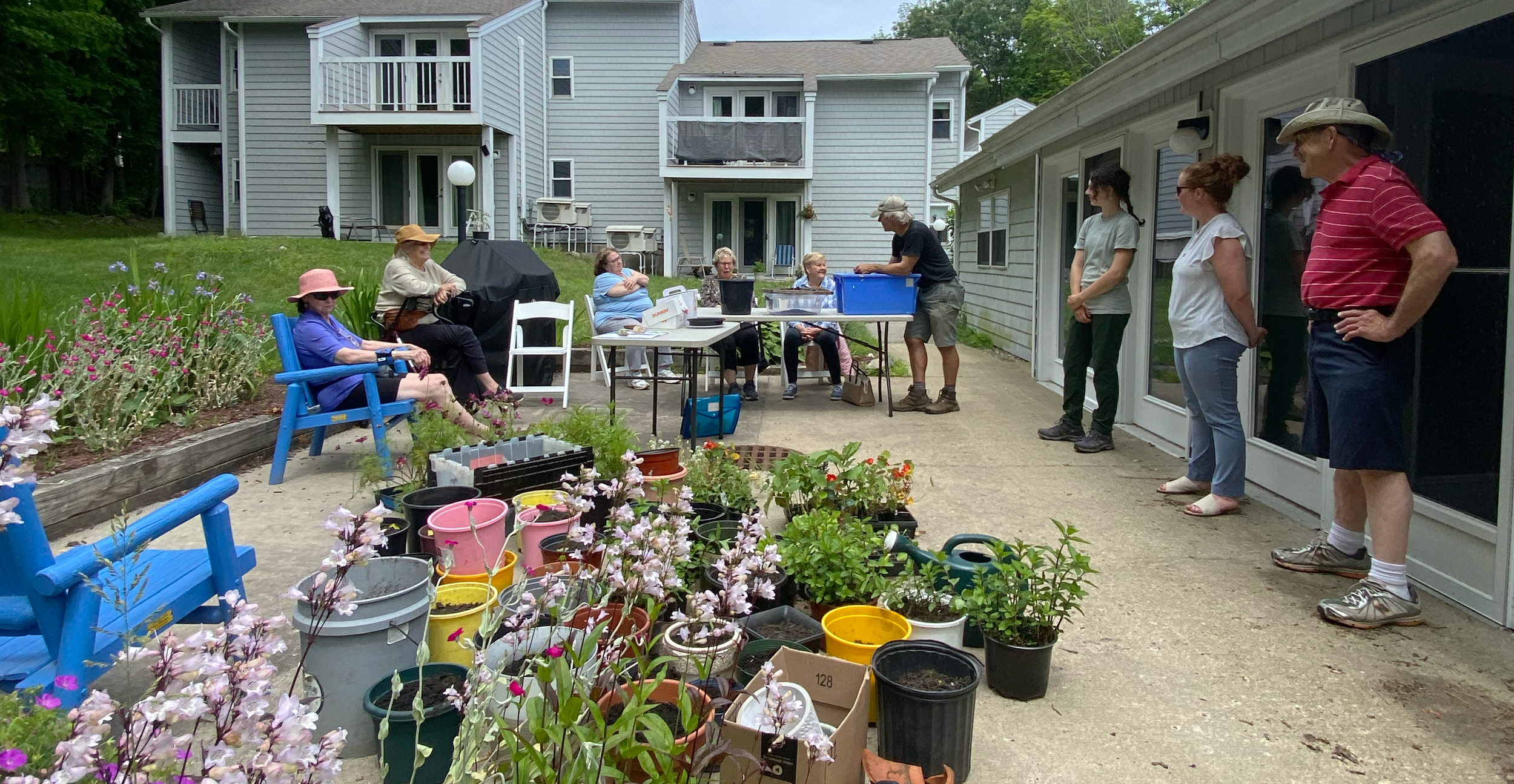
The project includes multiple components designed to build both immediate resilience and long-term sustainability. Enhanced fresh produce donations to the food pantry provide immediate support to vulnerable residents, complemented by prepared meals cooked using Holly Hill Farm produce. To address transportation barriers and build community food skills, the team conducted a container gardening workshop at Elm Street public housing and installed a demonstration garden at Willcutt Commons.
Public education expanded through the creation of practical guides—including "Cohasset Composts" and "Reimagine Your Lawn with Climate Smart Natives"—while community liaisons staffed an information table at Holly Hill Farm's spring plant sale to educate customers about climate-resilient native plants.
Download the guides here!