
What is a Resilience Hub?
Resilience hubs are nodes of information, support, and supplies that support community resilience.
Often these “nodes” are spatial and offer physical location (e.g. a library, church, or street corner) where supplies are distributed during a disaster or more frequently to meet ongoing community needs. However, we are adopting a definition of resilience hub that is not necessarily spatial. A Signal group that is responsible for different components of community resilience can also be a “hub.”
Resilience hubs can be intentionally designed or emergent in the face of community need.
Both intentionally designed and emergent hubs are flexible, multipurpose, community-centered, and used in many scenarios, including disasters and emergencies but also during blue sky days. From bulletin boards to physical buildings, resilience hubs centralize information, support, supplies, and other community resources. They are accessible community spaces with diverse uses and serve their communities by providing a reliable resource every day, no matter what.
Resilience hubs are spaces for community organizing and gathering where climate and social resilience are cultivated.
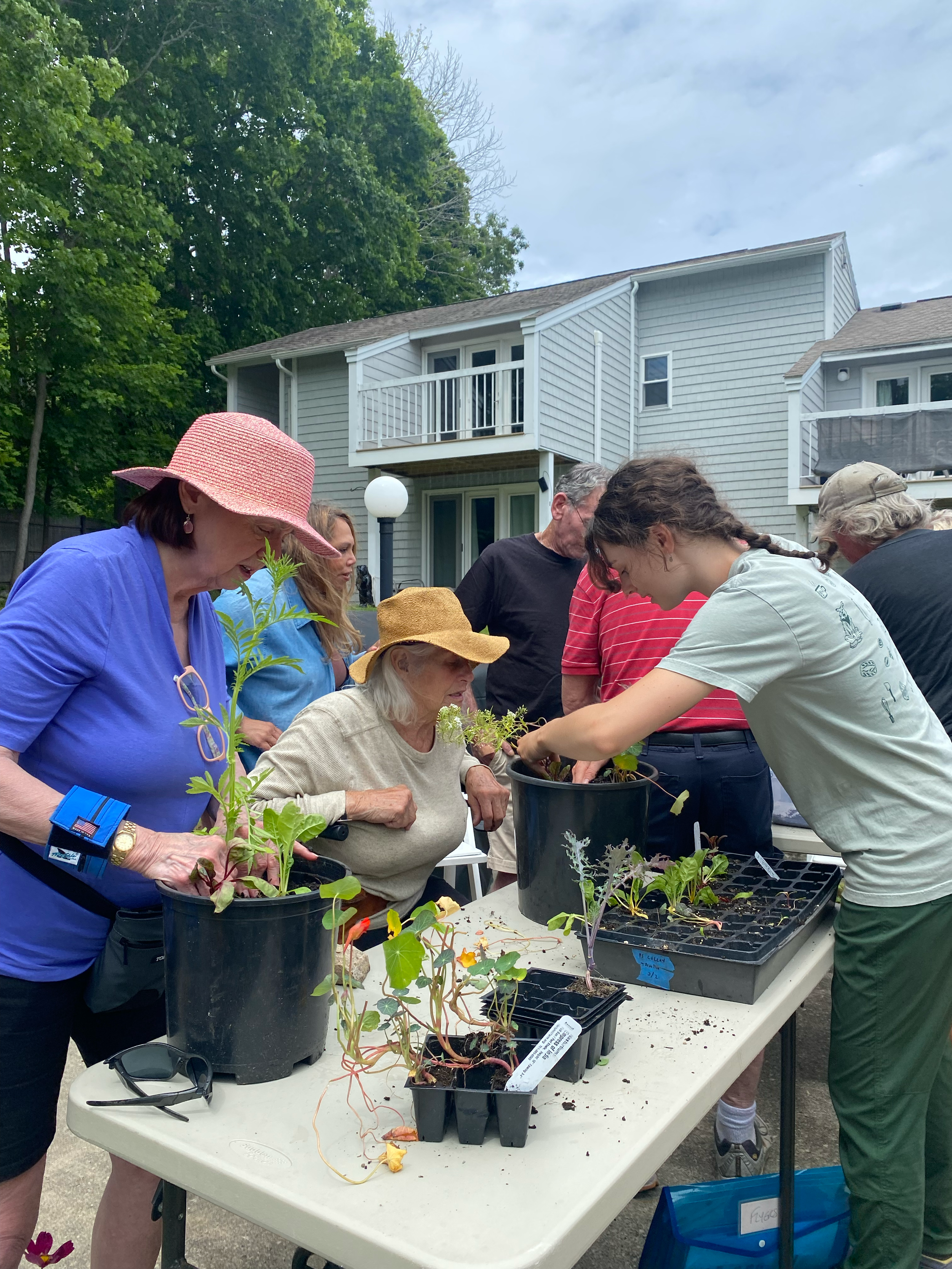
They may host services conducive to community flourishing, such as community kitchens, children's programming, tool libraries, or recreational space; provide social services in a recurring or permanent space, such as food pantries, case management, housing support, cooling centers, or clothing closets; and act as a gathering point, offering community space for free use. These services can often be found at libraries, faith-based organizations, community centers, or nonprofits, which make them great locations for a resilience hub.
When a resilience hub has physical infrastructure, many of these locations may need to be upgraded or retrofitted to accommodate the sustainability aims of a resilience hub.
These aims are often related to building energy systems, low impact design, the desired uses, and facility accessibility. In addition to their role in community, resilience hubs work to sustainably increase community adaptive capacity during emergencies. Many of these buildings focus on reducing carbon pollution and contribute to stormwater management, with rain gardens, rooftop solar, and shade trees for heat mitigation. Resilience hubs can also host back-up generators, food, tools, and communication infrastructure to assist community members during disasters and they can provide resources to aid during the recovery.